The short answer
Buenos Aires is the capital of Argentina, on the south-west shore of the Rio de la Plata, Wikipedia records; the city proper had 3,121,707 people at the 2022 census and its metropolitan area 16,366,641. Pedro de Mendoza founded a first settlement on 2 February 1536, in what is now the San Telmo district; it was abandoned in 1542, and Juan de Garay founded the permanent city on 11 June 1580. The name goes back to the Spanish sailors’ devotion to Our Lady of Buen Ayre, the fair winds. The constitutional amendment of 1994 made the city autonomous, hence its formal name, the Autonomous City of Buenos Aires. UNESCO named it a City of Design in 2005.
From Tally’s diary
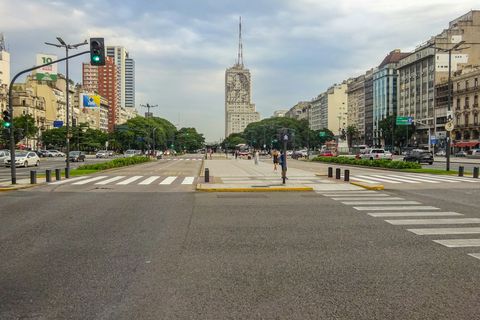
An avenue so wide I crossed it in instalments, waiting on little islands in the middle while the traffic decided. In one old quarter the tin houses were painted every colour going, and a couple danced on the cobbles to an accordion that sounded homesick. Dinner began at an hour I would have called bedtime, and nobody else seemed the least bit tired.
Why it's worth knowing
Where tango began. Tango originated in the 1880s along the Rio de la Plata, in the working-class districts of Buenos Aires and Montevideo, Wikipedia records, and UNESCO added it to its intangible cultural heritage lists on 31 August 2009, on a joint proposal by Argentina and Uruguay. It is danced at milongas, regular social dances.

Avenida 9 de Julio, the wide avenue crossed in instalments.
Photograph: Nikolai Kolosov via Unsplash, Unsplash licence, cropped
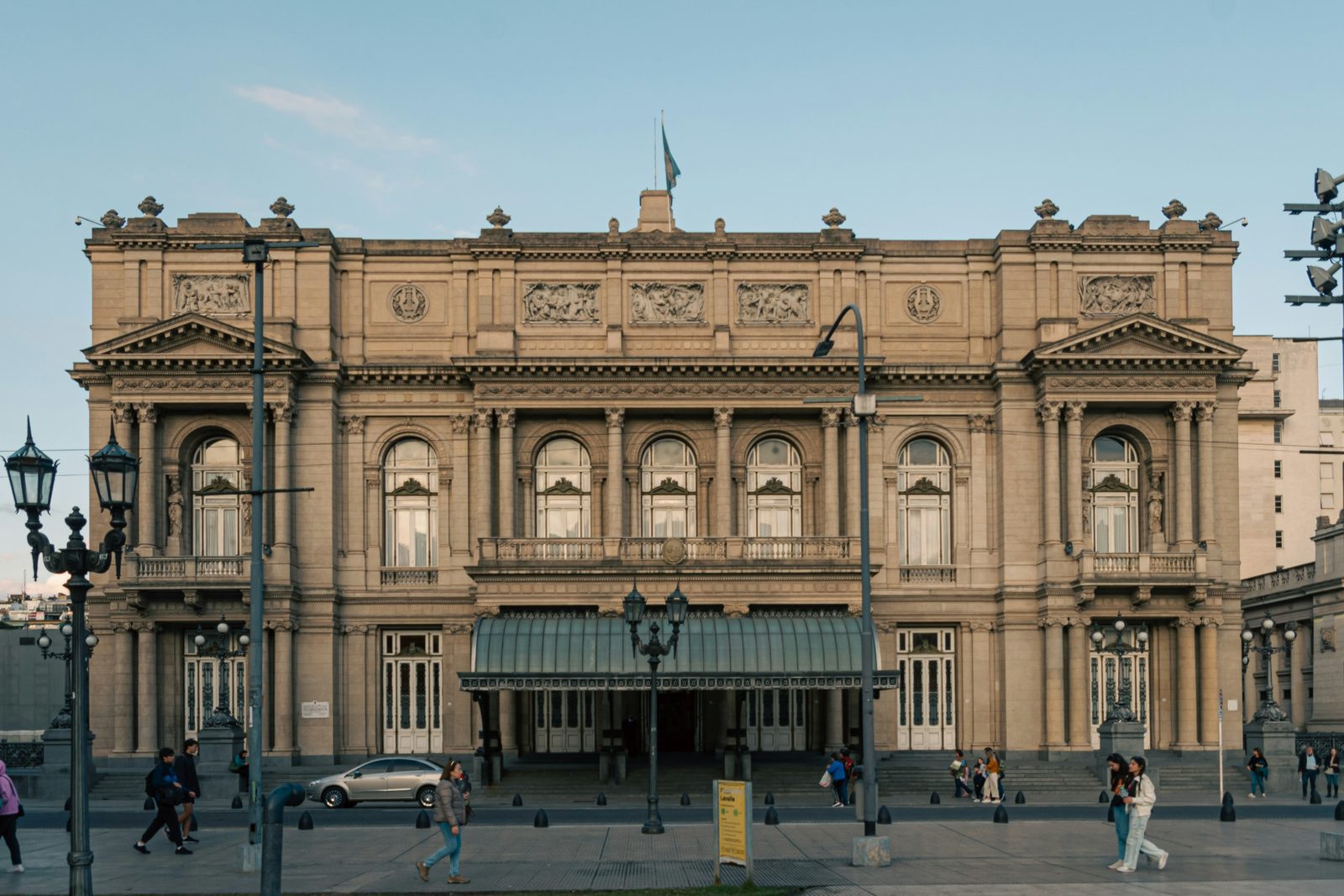
An opera house built for the ear. The present Teatro Colón opened on 25 May 1908 with Verdi’s Aïda, Wikipedia records, to designs begun by Francesco Tamburini and completed by Julio Dormal. The acoustician Leo Beranek, after surveying leading conductors and opera directors, ranked it the best room in the world for opera and second best for concerts. Its seating is given as 2,478 in the article’s infobox and 2,487 in its text, with standing room for 1,000. It was closed for restoration from October 2006 to May 2010.
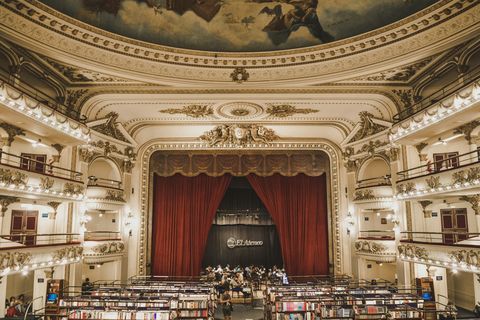
A city that reads. Wikipedia says Buenos Aires has more bookstores per capita than any other major city in the world, and calls El Ateneo Grand Splendid, in Recoleta, a celebrated bookstore. Its underground railway, the Subte, opened in 1913 and is the oldest in the Southern Hemisphere and in the Spanish-speaking world, and Avenida 9 de Julio is 140 metres wide.
The field notes
A painted street
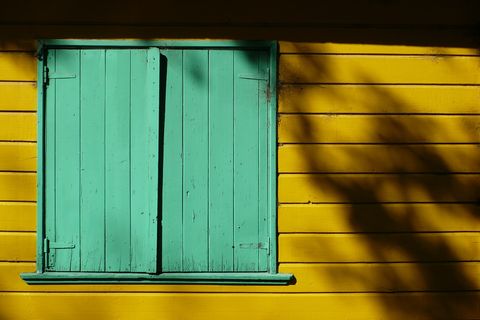
Caminito, “little path”, is a street museum and traditional alley about 100 metres long in La Boca, the old port quarter, Wikipedia records. After the railway there closed in 1954 the land became a dump, and over the following years the painter Benito Quinquela Martín, who lived nearby, helped restore it, painting the walls facing the street; by 1960 it had a stage at its southern end. Its name comes from the tango “Caminito”, written in 1926 by Quinquela’s friend, the composer Juan de Dios Filiberto.

October 2008A yellow wall and green shutters on Caminito, La Boca.
Photograph: Felipe Gabaldón, Caminito (La Boca, Buenos Aires), CC BY 2.0, cropped
Letters with flowers on
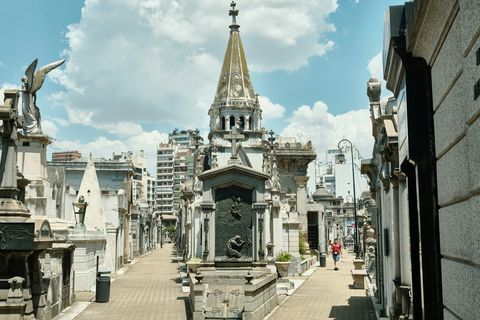
Fileteado is a style of drawing and lettering from Buenos Aires, with stylised lines, plant forms and lively colours, Wikipedia records. It began at the end of the nineteenth century on the grey horse-drawn carts that carried produce, milk and bread, later decorated the city’s buses, and is often finished with a poetic phrase, saying or aphorism, humorous, emotional or philosophical. UNESCO inscribed it as intangible cultural heritage in 2015. In Recoleta, the cemetery opened in 1822 holds 4,691 vaults, all above ground, on 5.5 hectares, among them the grave of Eva Perón.

El Ateneo Grand Splendid, a 1919 theatre now a bookshop, 2020.
Photograph: Noralí Nayla via Unsplash, Unsplash licence

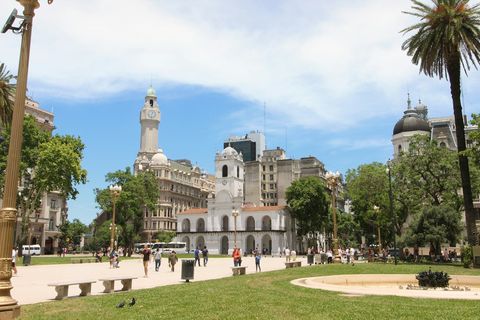
The Cabildo on the Plaza de Mayo.
Photograph: celso costa via Unsplash, Unsplash licence, cropped

An alley of vaults in Recoleta Cemetery.
Photograph: Frans Ruiter via Unsplash, Unsplash licence
- Eat dinner when the city does, which is later than you think, and then later still.
- Go to a dance evening and watch from the edge until somebody kindly asks you not to. (I left the list on a table by the floor, and it came back folded in eight. It can only have been asked to dance.)
- Sit quietly in the great hall of the opera house, and notice how carefully it listens back.
- The vaults in the old cemetery belong to families who still come to visit. Walk its lanes quietly, and give way to anybody carrying flowers.
- Look out for the painted signs with curling letters and flowers round them, and read each saying slowly. They are funnier than they look.
A relic from Buenos Aires

Relic, entry 284Railway closed: 1954Stage at south end by 1960
Caminito’s painted walls. After the railway along this alley in La Boca closed in 1954 and the ground became a dump, the painter Benito Quinquela Martín, who lived nearby, spent the next three years preparing the walls that faced the abandoned street and painting them in pastel colours; by 1960 a stage stood at its southern end, and the alley, about 100 metres long, is now a street museum named after a tango of 1926. The walls stand along the alley where he painted them.
Tally, in the marginFrom the corner I took it for a street that had simply got carried away. Halfway along I understood that somebody had chosen every one of those colours on purpose, wall by wall, for a place nobody else wanted, and I walked the rest of it slowly, the way one goes round a gallery.
Getting there
- 1
By air to Ezeiza
By air to Ezeiza International Airport, about 22 kilometres south of the city; the city’s second airport, Jorge Newbery, is built on reclaimed land on the coast.
- 2
The Subte in the centre
The Subte runs under the centre.
- ✓
When to go. All year.
What to arrange ahead. Two of the city’s best-known visits charge by their own rules: non-resident visitors pay to enter the Recoleta Cemetery, and the Teatro Colón sells its own guided tours.
Mark this place
The passport stamp for this place.
Common questions
Where is Buenos Aires?
Buenos Aires, the capital of Argentina, lies on the south-west shore of the Rio de la Plata, Wikipedia records; the city had 3,121,707 people at the 2022 census and its metropolitan area about 16.4 million.
Where did tango begin?
Tango began in the 1880s in the working-class districts of Buenos Aires, Argentina, and Montevideo, Uruguay, along the Rio de la Plata, Wikipedia records; UNESCO added it to its intangible heritage lists in 2009 on a joint proposal by both countries.
What is the Teatro Colón?
The Teatro Colón is the opera house of Buenos Aires, Argentina, opened on 25 May 1908 with Verdi’s Aïda; the acoustician Leo Beranek ranked it the best room in the world for opera, Wikipedia records.
What is Caminito in La Boca?
Caminito is a street museum about 100 metres long in La Boca, Buenos Aires, Argentina, restored with the help of the painter Benito Quinquela Martín after the railway there closed in 1954; it is named after a 1926 tango by Juan de Dios Filiberto, Wikipedia records.
Why is the Teatro Colón so famous?
For its sound. The acoustician Leo Beranek, after surveying leading conductors and opera directors, ranked the Teatro Colón in Buenos Aires, Argentina, the best room in the world for opera; it opened on 25 May 1908 with Verdi’s Aïda.
Who is buried in the Recoleta Cemetery?
The Recoleta Cemetery in Buenos Aires, Argentina, opened in 1822, holds 4,691 vaults, all above ground, among them the grave of Eva Perón, Wikipedia records.
What is fileteado?
Fileteado is a style of decorative drawing and lettering from Buenos Aires, Argentina, begun on horse-drawn carts at the end of the nineteenth century and often finished with a saying; UNESCO inscribed it as intangible cultural heritage in 2015, Wikipedia records.
How old is the Buenos Aires Subte?
The Subte, the underground railway of Buenos Aires, Argentina, opened in 1913, Wikipedia records; it is the oldest underground system in the Southern Hemisphere and in the Spanish-speaking world.
Photographs on this page
Tap a photograph to see it full size.
Photograph: Mauro Tchorbadjian via Unsplash, Unsplash licence
Photograph: Felipe Gabaldón, Caminito (La Boca, Buenos Aires), CC BY 2.0, cropped
Photograph: Nikolai Kolosov via Unsplash, Unsplash licence, cropped
Photograph: Noralí Nayla via Unsplash, Unsplash licence
Photograph: celso costa via Unsplash, Unsplash licence, cropped
Photograph: Frans Ruiter via Unsplash, Unsplash licence




